321Foundation
  • About
    • A Letter from Our President
    • What We Believe
    • History
    • Board of Directors & Executive Team
    • Contact
  • Education
    • Overview
    • Learning Program Boston
    • Educational Consulting
    • Education Resources
  • Awareness
    • Overview
    • Awareness Resources
  • Advocacy
    • Overview
    • Advocacy Resources
  • News
  • Support Us
  • Donate
  • Search
  • Menu Menu

Under New Law, Self-Advocates To Train Police

Advocacy, In the Media

From Disability Scoop

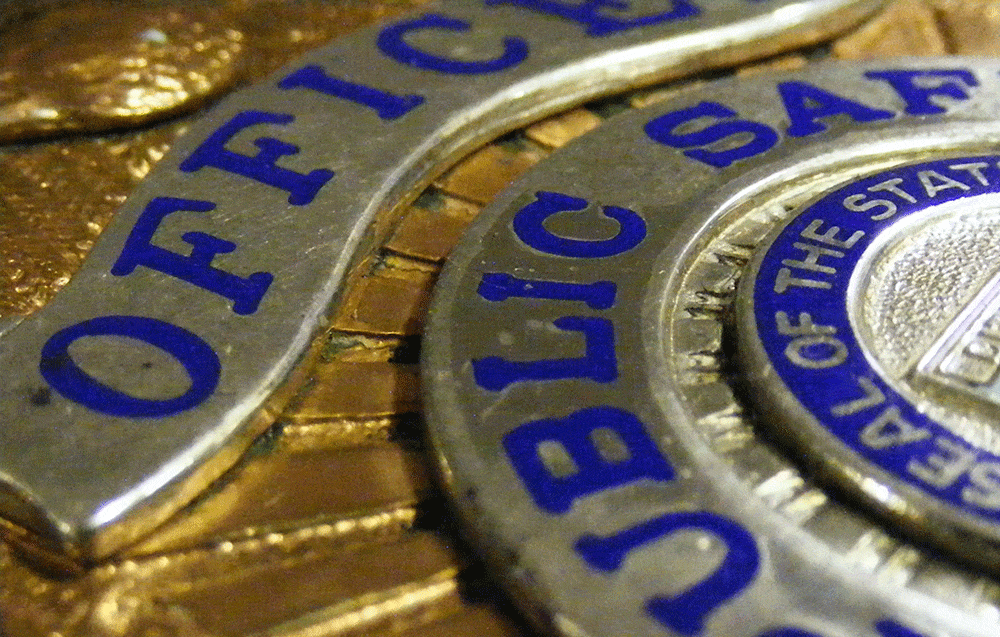
Following the death of Ethan Saylor, a young man with Down syndrome, Maryland has enacted a law requiring police to be trained by self-advocates on how to interact with people with developmental disabilities. The Ethan Saylor Alliance for Self-Advocates as Educators law takes effect July 1.

Read more at: http://www.disabilityscoop.com/2015/05/13/under-new-law-train-police/20295/


May 16, 2015/0 Comments/by Other
https://stagecpanel.321foundation.org/wp-content/uploads/2015/05/police_shield_News_5_16_15.gif 637 1000 Other https://stagecpanel.321foundation.org/wp-content/uploads/2020/05/3-21_Foundation_Logo.png Other2015-05-16 07:00:172015-06-10 02:23:45Under New Law, Self-Advocates To Train Police

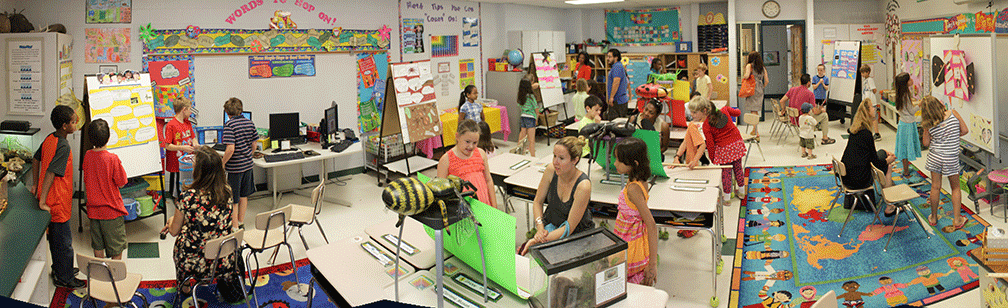
My Son Belongs in Your Child’s Class

Advocacy, In the Media

From BRIGHT | Innovation in Education

My four-year-old deserves a chance at a diploma and full life. So does every other child with special needs.

I sit in the elementary school conference room with my cornucopia of snacks and a throbbing headache. I recognize faces. I know their names and their role in our lives. But I don’t know what they believe a child with Down syndrome — like my son Charlie — is worth.

I want to trust them, but I am forever wary. The initiation mantra for every mother of a child with a disability rings in my ears: “No one will advocate for your child like you will. No one.”

Read more at: https://medium.com/bright/my-son-belongs-in-your-child-s-class-5eccebd8162c


April 28, 2015/0 Comments/by Other
https://stagecpanel.321foundation.org/wp-content/uploads/2015/06/classroom.png 308 1008 Other https://stagecpanel.321foundation.org/wp-content/uploads/2020/05/3-21_Foundation_Logo.png Other2015-04-28 18:52:432015-06-10 02:24:21My Son Belongs in Your Child’s Class

Rock Your Socks!

Advocacy, Our Blog

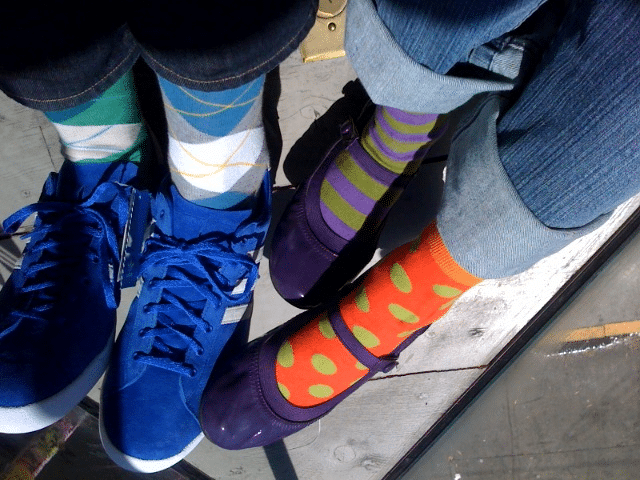
“Look at my socks!”, “Cool!  Look at my socks!”   I heard these words over and over again last year on March 21st, when I hosted our first ever Crazy Socks Day in celebration of World Down Syndrome Day at my daughters elementary school last year.   As soon as I walked into the school building, the kids were over the moon excited to show off their crazy, mismatched, brightly colored socks.    Why crazy fun socks you ask?   Down Syndrome International created this idea to highlight the idea that everyone has their own different and colorful abilities.   That people with Down syndrome must be able to enjoy full and equal rights, with ‘opportunities’ and ‘choices’. Many face challenges to this, as others fail to understand that people with Down syndrome are people first, who may need support, but should be recognized on an equal basis, without discrimination on the basis of disability. Empowering families to recognize the equal status of their members with Down syndrome is crucial, so that they can provide support, advocate for opportunities and choices and empower people with Down syndrome to express their own views and make their own decisions, as well as advocate for themselves.  March  21, 2015 marks the 10th anniversary of World Down Syndrome Day (WDSD) and each year the voice of people with Down syndrome, and those who live and work with them, grows louder.

The flyer I created this year reads:   “ROCK YOUR SOCKS!!!   Join us by wearing brightly colored, bold and mismatched socks, as we strive to create a single global voice, advocating for the rights, inclusion and well-being of people with Down syndrome in our community and around the world.”   Additionally, my husband and I purchased the World Down Syndrome Day logo wear to wear on that day at: https://www.worlddownsyndromeday.org/lots-of-socks.

In addition to having the kids wear their crazy socks, we asked for a $1.00 optional donation to support their  PTO and local Down syndrome organizations!   Kids were all over this and we raised almost $400.

In closing, our children are so excited to repeat the event this year.    Our daughter is in middle school now.  She is owning this experience by walking around her middle school putting up the flyers and by working with the News Club to come up with some other posters and morning announcement ideas to spread the word and generate excitement!

You can easily do this in your district too!    All it requires is a simple phone call or email to your principal to get the ball rolling.  We have found all school administration to by open and more than happy to spread the word!  So go out and find some crazy fun socks for you and the kids and contact your administrators!

Photo: Coley Cheng

March 21, 2015/0 Comments/by Renee Vekiarides
https://stagecpanel.321foundation.org/wp-content/uploads/2015/02/socks.png 480 640 Renee Vekiarides https://stagecpanel.321foundation.org/wp-content/uploads/2020/05/3-21_Foundation_Logo.png Renee Vekiarides2015-03-21 18:49:252015-05-14 17:39:14Rock Your Socks!

Cure for Down Syndrome or Celebration of Chromosomal Diversity?

Advocacy, Our Blog

As some of you may know, back in July 2013 scientists at UMass Medical School made a big discovery. They learned that a naturally occurring X chromosome “off-switch” could neutralize the extra chromosome responsible for Trisomy 21, also known as Down syndrome.[i]

The approach used by Dr. Jeanne Lawrence was inspired by the natural process that silences one copy of the female mammals’ two sex-determining X chromosomes during embryonic development. To prevent females from overdosing on these X chromosome genes, evolution invented a genetic element whose job is to deactivate half of those X chromosomes. They remain in the genome, but are not functional – gene silencing helps maintain similar expression patterns of X chromosomes in females and males. The X-inactivation gene (XIST), a large non-coding RNA molecule which covers the surface of one of the X chromosomes of female mammals, permanently blocks the expression, or activity of the genes on the affected X chromosome.

Dr. Lawrence mimicked this natural process by inserting the XIST gene into the gene-rich core of the extra chromosome 21 in patient-derived adult stem cells. In these laboratory cells they found that the RNA from the inserted XIST gene induced modifications that silenced the genes of chromosome 21, returning gene expression to near normal levels, even when measured eight different ways.

Now while this has been hailed in the press as a “cure for Down syndrome”, we are still only at the testing stage and any application to human subjects is still years away.[ii] However this potential for “chromosomal therapy” has stirred up controversy in the Down syndrome community, not dissimilar to how the development of cochlear implants have impacted the deaf community.

At one end of the spectrum, we have folks saying, “why wouldn’t you want to fix your child?” In the current era of pre-natal testing, this may be a real treatment option one day, and might affect the abortion rates of pre-natally diagnosed pregnancies, which have been increasing with each new pre-natal test that comes onto the market.[iii], [iv]

At the other end, most parents of children with Down syndrome don’t think their child needs “fixing” and wouldn’t change anything about them. In fact, some worry that attempting any kind of therapy, let alone chromosomal therapy, would affect their child’s personality, which they would not want to turn “off”.

Others say, only use gene-silencing therapy to combat the ill-effects of Down syndrome. But where do you draw the line? Sure, for the obvious health issues such as the heart, digestive, hearing and vision challenges (if these can be individually identified and isolated chromosomally – we “fix” these now post-natally), but what about cognitive impairment levels, which universally affect all individuals with Down syndrome? Who’s to say where cognitive impairment begins? An IQ of 65, 70, 75? Just this month, the Supreme Court decided to revisit a case involving the execution of criminals with “mental retardation”.[v] 12 years ago, they removed the death penalty for criminals with an intellectual disability but left the details of defining what constitutes intellectual disability to the states, resulting in a range of IQ being used to apply the law. And is IQ really the right measure anyway? I’d offer up EQ or Emotional Intelligence as an alternative – the last time I checked, my 9-year old son with Down syndrome had a higher EQ than most people I know.

This raises some ethical questions – with IVF allowing parents to chose what type of children they want (ranging from sex selection to avoiding certain undesirable genetic conditions such as Down syndrome), to pre-natal testing & selective abortion, can we as parents be trusted to exercise good judgement over our choice? Again, I ask – where do we draw the line? Technology is only going to get better and soon we’ll be able to test pre-natally for things like same-sex preference. I suspect the media coverage would be dramatically different if we discovered a pre-natal test for the “gay gene” or found a genetic “treatment” for homosexuality. The latter certainly wouldn’t be hailed as a “cure for homosexuality”.

Having three copies of our 21st chromosome is one of the most common spontaneous “alterations” in our attempts at reproduction and if this is a natural part of the human condition, shouldn’t we embrace this diversity, much as the way we celebrate our differences in gender, color, race, national origin, religion, and sexual orientation? Social resistance to genetic selection is emerging. Earlier this year, North Dakota became the first state in our nation to pass a law prohibiting abortion for sex selection or genetic abnormalities such as Down syndrome.[vi] In social media, concern over genetic racism is rising. While chromosomal therapy might very well be a treatment in our lifetime, many in the Down syndrome community would like to propose a movement to celebrate chromosomal diversity instead. How very fitting in celebration of World Down Syndrome Day!

[i] Jiang, J. et. al. (2013). “Translating dosage compensation to Trisomy 21”. Nature, 500, 296-302.

[ii] Aleccia, J. (2011). “Could it be a cure?” NBC News. http://www.nbcnews.com, accessed February 2, 2014.

[iii] Egan, J.F., et. al. (2011). “Demographic differences in Down syndrome live births from 1989 to 2006”. Prenatal Diagnosis, 31, 389-394.

[iv] Messina, J. (2013) “Reflections on Down syndrome”. Disability INDEX. https://www.disabilityinfo.org/blog/?p=3682 , accessed February 2, 2014.

[v] Clark, M., “Supreme Court to Consider What Defines Intellectual Disability”. Disability Scoop. http://www.disabilityscoop.com/2013/12/10/supreme-court-intellectual/18959/ , accessed Feb 2, 2014.

[vi] The Prenatal Non-Discrimination Act (PREDNA) was signed into law on March 26, 2013, details http://legiscan.com/ND/bill/1305/2013 , accessed February 2, 2014.

February 28, 2015/0 Comments/by Julie Messina
https://stagecpanel.321foundation.org/wp-content/uploads/2015/01/IMG_0950.jpg 1872 2808 Julie Messina https://stagecpanel.321foundation.org/wp-content/uploads/2020/05/3-21_Foundation_Logo.png Julie Messina2015-02-28 19:40:222015-05-14 18:24:01Cure for Down Syndrome or Celebration of Chromosomal Diversity?

Reader’s View: Building Acceptances

Advocacy, Education, Our Blog

A Letter to the Editor of the Duxbury Clipper

We have recently learned that you have several students with Down syndrome in the Duxbury school district.

Although significant strides have been made in the past few decades in areas of health, education, and public perception of people with Down syndrome, many misperceptions still exist. Stereotypes and pre-conceived notions can limit opportunities for people with Down syndrome to live up to their full potential.

In the 1940’s, Dr. Spock recommended institutionalization for babies born with Down syndrome. Many individuals spent their lives without access to education or the outside world. That fact, coupled with the fact that Down syndrome is a low-incidence disability, and the life expectancy as recently as the 1980s was only 25 years of age, has shaped some of society’s outdated generalizations and expectations. Thanks to remarkable advances in medicine, the new life expectancy is 60 years of age. This has allowed for researchers to delve deeper into the role that the extra 21st chromosome has on lifelong development.

New advances in Down syndrome research have uncovered a great deal about how individuals with Down syndrome process information and learn. Students with Down syndrome have cognitive strengths that can support them in a general education classroom setting. Most children with Down syndrome are strong visual learners, and, with targeted instruction, some children have the capacity to learn to read whole words as young as 3 years old.

Read more at http://duxburyclipper.ma.newsmemory.com

January 21, 2015/0 Comments/by Maureen Blazejewski
https://stagecpanel.321foundation.org/wp-content/uploads/2014/12/banner5.jpg 1872 2808 Maureen Blazejewski https://stagecpanel.321foundation.org/wp-content/uploads/2020/05/3-21_Foundation_Logo.png Maureen Blazejewski2015-01-21 16:23:352015-05-16 06:46:09Reader’s View: Building Acceptances

Watching granddaughter Lucy singing on stage, and grateful for the moment

Advocacy, In the Media

From The Boston Globe – Globe South

There is such joy in Lucy. I don’t always see it. Sometimes I’m too focused on improving her, reminding her to stand up straight, to look a person in the eye when she’s saying hello and goodbye, to slow down her words when she talks.

“Can you say that again, Lucy?” “Where are your shoes?” “Did you brush your teeth?” “Do you have your seat belt buckled?” Always on her case but for her own good, right?

Lucy, my first-born grandchild, is 11. I worried so about her when she was born. I still do. She has Down syndrome. There are plenty of reasons for worry.

But I worry about my other grandkids, too. You love someone and you want to protect them. And you can’t. So you worry.

Read more at: http://www.bostonglobe.com/metro/regionals/south/2015/01/18/watching-granddaughter-lucy-singing-stage-and-grateful-for-moment/Sj3YZwjmEPrEzzSeb2GsyI/story.html?event=event25

January 18, 2015/0 Comments/by Other
https://stagecpanel.321foundation.org/wp-content/uploads/2020/05/3-21_Foundation_Logo.png 0 0 Other https://stagecpanel.321foundation.org/wp-content/uploads/2020/05/3-21_Foundation_Logo.png Other2015-01-18 16:27:272015-05-16 06:46:46Watching granddaughter Lucy singing on stage, and grateful for the moment

The ABLE Act is Law

Advocacy, In the Media

From National Down Syndrome Congress (NDSC)

As 2014 comes to a close, we begin a new chapter for people with disabilities. The Stephen Beck, Jr. Achieving a Better Life Experience (ABLE) Act was passed by both the House of Representatives and Senate by overwhelming majorities, and signed into law by President Obama late last week. This means families will be able to save for individuals with Down syndrome and other disabilities through 529-style savings accounts, without affecting their government benefits. Below is a brief FAQ to explain more about ABLE accounts.

Read more at: http://myemail.constantcontact.com/Learn-More-About-the-ABLE-Act.html?soid=1101343243561&aid=gqIqtokX20M

December 23, 2014/0 Comments/by Other
https://stagecpanel.321foundation.org/wp-content/uploads/2020/05/3-21_Foundation_Logo.png 0 0 Other https://stagecpanel.321foundation.org/wp-content/uploads/2020/05/3-21_Foundation_Logo.png Other2014-12-23 16:50:352015-05-16 06:48:14The ABLE Act is Law

Ten Things You Must Know About ABLE Accounts

Advocacy, In the Media

From National Disability Institute

On Dec. 16, 2014, the U.S. Senate overwhelmingly passed the Achieving a Better Life Experience (ABLE) Act of 2014 by a vote of 76 to 16. In recognition of this unprecedented legislation, NDI has created a list of 10 items about ABLE accounts that individuals with disabilities and their families should know.

View the full NDI press release that includes the list of Ten Things You Must Know About ABLE Accounts at: http://www.realeconomicimpact.org/News.aspx?id=460

Watch Now at: https://www.youtube.com/watch?v=Tv8kIdAovOQ

December 18, 2014/0 Comments/by Other
https://stagecpanel.321foundation.org/wp-content/uploads/2020/05/3-21_Foundation_Logo.png 0 0 Other https://stagecpanel.321foundation.org/wp-content/uploads/2020/05/3-21_Foundation_Logo.png Other2014-12-18 16:05:512015-05-16 06:48:59Ten Things You Must Know About ABLE Accounts

Inclusive education can provide better language and academic outcomes

Advocacy, Education, In the Media

From Down Syndrome Education International

In some countries, children with Down syndrome are educated in mainstream, or regular, classrooms alongside their non-disabled peers. Educational research suggests that there are distinct advantages to inclusive education.

Read more at: www.dseinternational.org/en-us/education21/6/

View all examples at: www.dseinternational.org/en-us/education21/

December 6, 2014/0 Comments/by Other
https://stagecpanel.321foundation.org/wp-content/uploads/2020/05/3-21_Foundation_Logo.png 0 0 Other https://stagecpanel.321foundation.org/wp-content/uploads/2020/05/3-21_Foundation_Logo.png Other2014-12-06 16:10:042015-05-16 06:49:32Inclusive education can provide better language and academic outcomes

Reflections on Down Syndrome

Advocacy, Our Blog

Since October is Down syndrome Awareness Month, I thought I would dig into some critical statistics in this community to understand what’s behind the numbers. Much has been said and written in the popular American press about the 90% plus termination  rate when a pregnancy receives a definitive pre-natal diagnosis of Down syndrome.  Diverse sources from the New York Times to politicians Sarah Palin and Rick Santorum have used this statistic.

The 92% statistic actually comes from a systematic international study (Mansfield et. al.) of 10 individual studies conducted between 1980 and 1998.[i]  Its sample of 5,035 patients only included 77 U.S. individuals drawn from three U.S. studies, all of which were conducted in the 1980s.  So while technically correct globally, the U.S. sample is small and the study is not contemporary. Also this study showed great variation in termination rates not only amongst countries, but also across different regions of the U.S.

So while this 92% statistic is often referenced it may not be as applicable to the current U.S. population.  A more recent review of 24 available U.S. studies conducted between 1995 and 2011, show this rate ranging from 50 – 90% depending upon the sample size and geographic location, again showing great variation across different regions in the U.S.[ii]  However, even taking a simple average of the range, this means the majority of U.S. pregnancies that receive a definitive diagnosis of Down syndrome are terminated.

Note also that this statistic only applies to definitive tests for Down syndrome.  Historically only 2-3% of pregnant women would chose chorionic villus sampling (CVS) or amniocentesis, the only definitive tests (99% accurate) for Down syndrome. These returned results generally only in the 2nd trimester and were expensive, invasive tests with risks of miscarriage. Thus, they were only recommended for pregnant women above the age 35, the threshold age where the likelihood of Down syndrome occurring is higher (1 in ~750 for all pregnancies; 1 in ~385 for pregnant women at 35 years of age).  However in 2011 inexpensive, 1st trimester non-invasive pre-natal screening (NIPS) tests became available. Now the American Congress of Obstetricians & Gynecologists (ACOG) recommends screening for all pregnant women regardless of age. Sarah Cullen from the Massachusetts Down Syndrome Congress (MDSC) reports that since the introduction of NIPS, their First Call Program has seen a 33% rise in the number of pre-natal (vs. post-natal) referrals.[iii] An increasing number of diagnoses are being delivered on a pre-natal basis and herein lies the problem….

History shows that when pre-natal tests are introduced, termination rates of pregnancies identified with the targeted anomaly increase.  Down syndrome is no exception.  25 years ago when amniocentesis was the only definitive test for Down syndrome, researchers calculated that there was about a 20% abortion rate (4,474 live births vs. 5,633 projected births based on maternal age in 1989).[iv]  Over the last 20 years, however, the abortion rate for pregnancies with a diagnosis of Down syndrome has skyrocketed. In 2006, ~8,000 live births of babies with Down syndrome were projected in the U.S. Yet only 3,989, babies with Down syndrome were born, implying an abortion rate of over 50%.

Now we do not know how many of the 3,989 women that had babies with Down syndrome received a post-natal diagnosis (either because they were not offered the test and were unaware that testing for Down syndrome is available, or they rejected the tests), or a pre-natal diagnosis (they received a positive pre-natal test result and made a decision to have a baby with Down syndrome).  However, history repeats itself, Given that there are now four companies offering NIPS tests and even more tests for Down syndrome in development, we can only expect an even greater increase in the abortion rate.  Additionally, the recently passed Affordable Care Act is recommending universal screening for Down syndrome as “preventative care”. We see bias bleed into policy here since the only way to “prevent” Down syndrome is to terminate the pregnancy.

I live in Boston where the overwhelming majority of adults identify as “Pro Choice”. I would guess that some in this majority would be disconcerted by selective abortion of a planned baby.  They might consider this an act of discrimination instead of an issue pertaining to reproductive rights.  As we “advance” technologically with screening tests for more and more genetic conditions, aren’t we moving towards the elimination of certain sub-groups within our population?

Both my children are in the highest risk categories for being eliminated: a boy with Down syndrome and a girl of half-Chinese ancestry.  In China and some Asian ethnic populations in the U.S., genetic testing is used to select for the sex of a child, leading to abortion when tests show positive for the undesirable XX chromosome.  In most of the U.S., however 3×21 (3 copies of the 21st chromosome, or Down syndrome) is riskier for the child.

I find all of this troubling on many levels.  While I myself am a Christian and believe in the value of all human life, I know many non-Christian parents of children with disabilities who espouse the view that no matter what the form or intellectual capacity, every individual has something of value to offer to the world.  Though I was initially devastated with my son’s diagnosis of Down syndrome, I have learned to appreciate his many gifts.  He has a joie de vie and a love for life that is unparalleled – an attitude towards life we could all learn from.  He has taught me that “imperfection” is part of the human condition and this is what makes us human.

Which brings me to my last point: I wonder if our human genome is attempting to evolve to a better, higher more sophisticated form? Having three copies of our 21st chromosome is one of the most common spontaneous “alterations” in our attempts at reproduction.  Dr. Dennis McGuire from the Adult Down Syndrome Center at Lutheran General Hospital in Park Ridge, Illinois posed the following provocative question: “What would happen if people with Down syndrome ruled the world?[v]  Below is my Top 10 Summary, excerpted from his extensive list:

  1. Affection, hugging and caring for others would make a big comeback
  2. All people would be encouraged to develop and use their gifts to help others
  3. People would be refreshingly honest and genuine
  4. People who engage in self-talk would be considered thoughtful and creative
  5.  “The Rat Race” would not survive
  6. Work would be revered, no matter what kind, from doing the dishes to rocket science
  7.  “Here and Now” (i.e. living in the present) would command a great deal more respect than it currently does
  8. Speed would be far less important than doing the job right
  9. Stopping to smell the roses would not just be a cliché
  10. People would not hurt the feelings of others.  They also would not lie or keep secrets.  Therefore there would probably be no secret service agents, spies, or terrorists

Given this, whose genome is actually more evolved?

I’d like to conclude by circling back to NIPS and what this means for us as a community.  Virtually every couple that finds themselves pregnant will be offered a test for Down syndrome. This is seldom presented as optional, but it is. Instead of agreeing to be tested as part of routine pre-natal care, I challenge you to think about the purpose of such a test (and other such tests that you will no doubt encounter).  Social resistance to pre-natal genetic selection is emerging. Earlier this year, North Dakota became the first state in our nation to pass a law prohibiting abortion for sex selection or genetic abnormalities such as Down syndrome.[vi] Perhaps there is a future for both my kids after all. And for the rest of us who have no immediate plans to become pregnant, I encourage you to meet with a family living with Down syndrome.  You might be surprised how a short time spent could change the course of your life for the better.

[i] Mansfield et. al., “Termination rates after prenatal diagnosis of Down syndrome, spina bifida, anencephaly, Turner and Klinefelter syndromes: a systematic literature review”, European Concerted Action: DADA (Decision-making After the Diagnosis of a fetal Abnormality). Prenatal Diagnosis, 19 (1999)

[ii] Natoli et. al., “Prenatal diagnosis of Down syndrome: a systematic review of termination rates from 1995 – 2011”, Prenatal Diagnosis, 32 (2012)

[iii]In an interview with the author on October 23, 2013, Sarah Cullen reported 32 pre-natal referrals for fiscal year 2013, compared to 18 for 2011.

[iv] Egan et. al., “Demographic differences in Down syndrome live births from 1989 to 2006”, Prenatal Diagnosis, 31 (2011)

[v] McGuire, D., “If People with Down Syndrome Ruled the World”

[vi] The Prenatal Non-Discrimination Act (PREDNA) was signed into law on March 26, 2013, online link accessed October 20, 2013, http://legiscan.com/ND/bill/1305/2013
October 1, 2014/0 Comments/by Julie Messina
https://stagecpanel.321foundation.org/wp-content/uploads/2015/01/IMG_0903.jpg 1872 2808 Julie Messina https://stagecpanel.321foundation.org/wp-content/uploads/2020/05/3-21_Foundation_Logo.png Julie Messina2014-10-01 19:23:422015-05-16 06:50:29Reflections on Down Syndrome
Page 8 of 8«‹678
3-21 Foundation

Categories

  • Advocacy
  • Cognition
  • Education
  • Featured
  • Health
  • In the Media
  • Our Blog

Archives

  • October 2023
  • February 2022
  • September 2020
  • August 2020
  • October 2019
  • September 2019
  • August 2019
  • July 2019
  • May 2019
  • March 2017
  • May 2016
  • April 2016
  • March 2016
  • February 2016
  • January 2016
  • December 2015
  • November 2015
  • October 2015
  • September 2015
  • August 2015
  • July 2015
  • June 2015
  • May 2015
  • April 2015
  • March 2015
  • February 2015
  • January 2015
  • December 2014
  • November 2014
  • October 2014

Copyright 2026 © 3-21 Foundation, Inc. All rights reserved.

  • Facebook

Site designed and managed by Body1

Scroll to top