321Foundation
  • About
    • A Letter from Our President
    • What We Believe
    • History
    • Board of Directors & Executive Team
    • Contact
  • Education
    • Overview
    • Learning Program Boston
    • Educational Consulting
    • Education Resources
  • Awareness
    • Overview
    • Awareness Resources
  • Advocacy
    • Overview
    • Advocacy Resources
  • News
  • Support Us
  • Donate
  • Search
  • Menu Menu

Learning Program Online – Registration Closing Soon

Education, In the Media

From The Learning Program Online:

Registration is closing for LP Online! Offered by our affiliate-partner, the Down Syndrome Foundation (Orange County, CA) this series of 10 online workshops is for parents/caregivers and educators of elemtary-aged students with Down syndrome. LP Online is the webinar equivalent of our Learning Program parent sessions. Registration is currently open for Level 1, 2 and 3 – these workshops mirror the content covered in our LPB parent sessions, but in an interactive, online format. The live event will be on a weekday, depending on level – all webinars will be recorded and online links will be accessible after each session if you are unable to attend the live event. The deadline to register for LP Online is Sept 11. The first webinar will be on Sept 14.

For more information and to register, go to: https://lponline2015-2016.eventbrite.com


September 9, 2015/0 Comments/by Julie Messina
https://stagecpanel.321foundation.org/wp-content/uploads/2015/03/dwf.png 77 507 Julie Messina https://stagecpanel.321foundation.org/wp-content/uploads/2020/05/3-21_Foundation_Logo.png Julie Messina2015-09-09 22:03:572015-09-12 22:14:13Learning Program Online – Registration Closing Soon

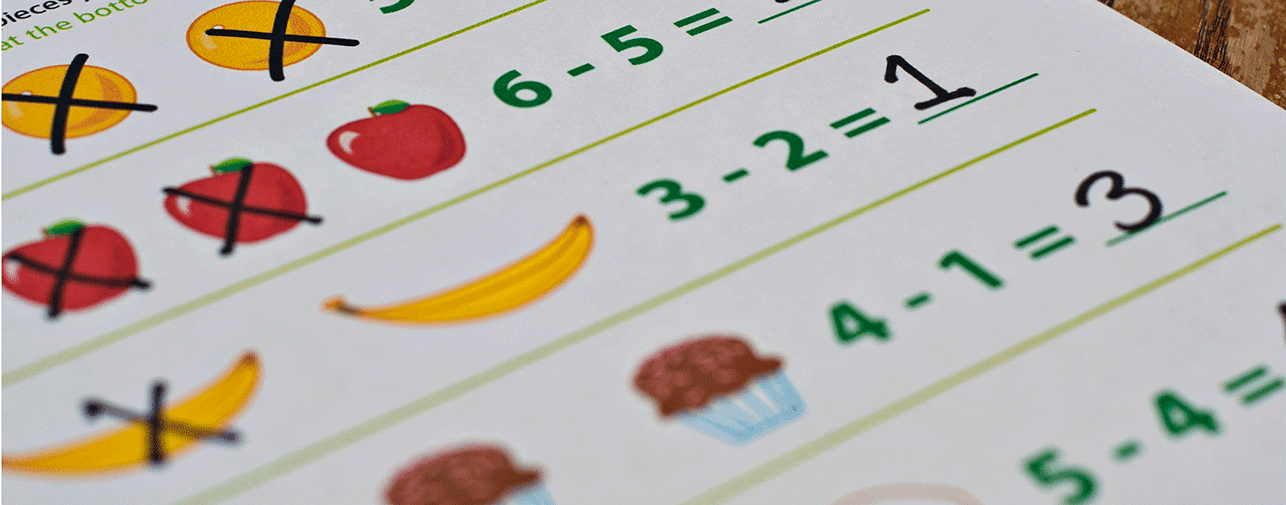
Can we teach math through reading?

Education, Our Blog

By Alex Lauric

Increasingly research is showing that a powerful way of connecting school mathematics to everyday life is by exposing children to the mathematics embedded in literature.  We are talking about books of literary quality which were not written for the primary purpose of teaching math. Instead the books are supposed to provide a pleasurable literary experience with mathematics used to serve the story for authentic purposes. Children’s literature can provide children with a meaningful context for learning math, by connecting mathematical ideas to their personal experiences. Reading these stories can help build up informal knowledge to serve as a foundation for developing formal and generalized understanding of mathematics.

The question is can we apply this research to our children with Down syndrome? It may be worth trying; we have the need and the children have the strength for it.

For the need: Numeracy and math in general, are difficult for most children with Down syndrome. Because math is a relative weakness, children are at risk for becoming resistant to instruction for fear of failure and frustration. In most cases, in order to make progress and reach their potential, children need additional work and practice outside the school.

For the strength: Reading skills are an area of relative strength! Our children love books, love reading and are good at it. They are visual learners and master skills by repetition and over-learning. Can we channel the success in reading toward making math, especially numeracy skills, more accessible?

Reading can be a non-threatening way of introducing new concepts. The story provides the justification for pointing out mathematical ideas without formal teaching and testing. Books can be used both to preview and review skills, and can be revisited over and over again. Same skills can be presented in several books providing variation while focusing on targeted concepts. We are reading to our children anyway; why not pick up some good books highlighting math ideas? Here are some suggestions to get us started.

Title Author Recommended
grades
Math concept
Bear in a Square Stella Blackstone PreK- K 2d shapes
The First Day of Winter Denise Fleming PreK- K counting, reasoning
One Monkey Too Many Jackie F. Koller PreK- K counting
Sheep in a Shop Nancy E. Shaw PreK- 1 money
Anno’s Counting Book MitsumasaAnno PreK- 3 counting, sets
What Time is it, Mr. Crocodile? Judy Sierra PreK- 3 time
Ten on the Sled Kim Norman K – 1 counting
Emily’s First 100 Days of School Rosemary Wells K – 1 counting
A Dollar for Penny! Julie Glass K – 1 money
Five Little Monkeys Go Shopping Eileen Christelow K – 1 counting subtraction
I’m the biggest thing in the ocean Kevin Sherry K – 2 counting, length
Alexander, Who Used to Be Rich Last Sunday Judith Viorst K – 3 money
Inch by Inch Leo Lionny K – 3 measurement
Ready, Set, 100th day! Nancy Wallace 1 – 2 place value, addition, subtraction
Counting on Frank Rod Clement 1 – 3 counting, estimation, comparisons
Five Creatures Emily Jenkins 1 – 3 sorting
One is a snail, ten is a crab April P. Sayre 1 – 3 place value, addition
Two of Everything Lily T. Hong 1 – 3 addition, subtraction
Bean Thirteen Matthew McElligott 1 – 3 odd/even numbers
365 Penguins Jean-Luc Fromental 1 – 4 addition
It’s Probably Penny LoreenLeedy 1 – 4 probability
Measuring Penny LoreenLeedy 2 – 4 measurement


Bibliography

1. Capraro RM, Capraro MM: Are you really going to read us a story? Learning geometry through children’s mathematics literature. Reading Psychology 27:21-36, 2006

2. Adams TL, Lowery RM: An Analysis of Children’s Strategies for Reading Mathematics. Reading & Writing Quarterly 23:161-177, 2007

3. Heuvel-Panhuizen Mvd, Boogaard Svd: Picture Books as an Impetus for Kindergartners’ Mathematical Thinking. Mathematical Thinking and Learning 10:341-373, 2008

4. Elia I, van den Heuvel‐Panhuizen M, Georgiou A: The role of pictures in picture books on children’s cognitive engagement with mathematics. European Early Childhood Education Research Journal 18:275-297, 2010

5. Marston JL, Muir T, Livy S: Can We Really Count on Frank? Teaching Children Mathematics 19:440-448, 2013
September 7, 2015/0 Comments/by Other
https://stagecpanel.321foundation.org/wp-content/uploads/2015/09/Math_Sheet_Web.png 505 1286 Other https://stagecpanel.321foundation.org/wp-content/uploads/2020/05/3-21_Foundation_Logo.png Other2015-09-07 18:26:222015-09-07 18:32:26Can we teach math through reading?

Learning Program Boston – Registration Open for Early Education Workshops

Education, In the Media

From Learning Program Boston:

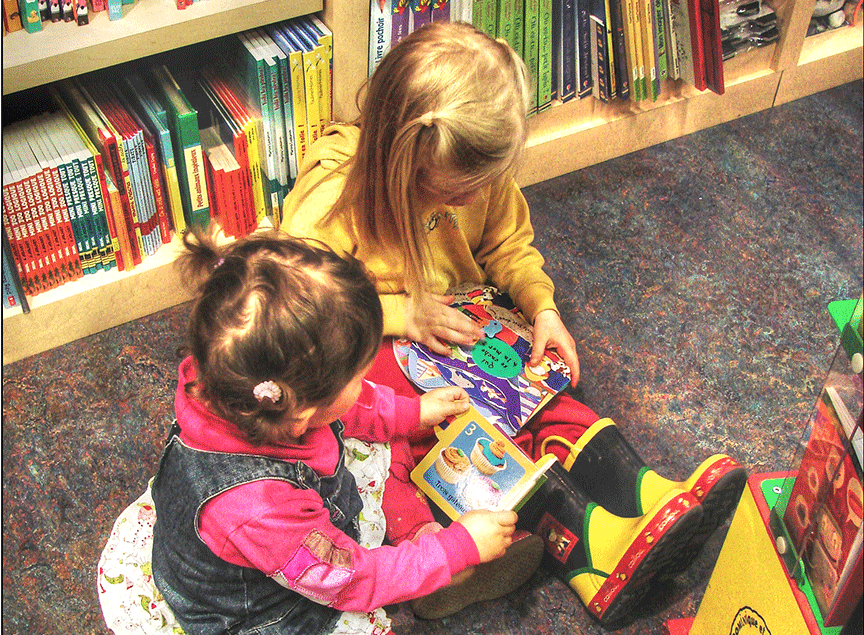
Registration is now open for our 2015-2016 Early Education workshop series. Held on Wednesday evenings at the MDSC’s Burlington offices, this six-part series is for families of kids with Down syndrome (DS) between the ages of 3-5 years who are just beginning to show an interest in letters and numbers. Please see below for more information.
https://www.dropbox.com/s/cyfsbpz6tudq0s5/EE%20Flyer%202015.pdf?dl=0


August 27, 2015/0 Comments/by Julie Messina
https://stagecpanel.321foundation.org/wp-content/uploads/2015/09/Kids_Reading_Web.png 635 864 Julie Messina https://stagecpanel.321foundation.org/wp-content/uploads/2020/05/3-21_Foundation_Logo.png Julie Messina2015-08-27 22:12:222015-09-12 22:18:46Learning Program Boston – Registration Open for Early Education Workshops

Dealing with Challenging Behaviors 

Education, Our Blog

Dealing with challenging behaviors can be frustrating and overwhelming for parents and educators. It is helpful to remember that all behavior, whether positive or negative, serves a function.  When we are able to analyze the function of a specific behavior, we can then begin to figure out what the child is trying to tell us with their behavior. Some common functions of challenging behaviors in children with Down syndrome include attention-seeking behaviors, escape/avoidance, and communication. Once we have a sense of what the function of a specific behavior is, we can begin to find positive replacement behaviors that better serve the child in getting his/her needs met.

Some tips for addressing challenging behavior
It is important to remain calm and neutral otherwise your reaction may unwillingly reinforce the behavior. While it can be difficult to do, remember that the behavior is not about you it is about something the child is trying to communicate. Respond but do NOT React.

1. Make sure your response to the behavior is calm and concise. Give a simple redirection and then move on.

2. Pick your battles: If the behavior is not unsafe then it is probably not a big deal. One way to think about this is to put behaviors in different “baskets” or categories.

              – Basket 1: The behavior is unsafe-it needs to be addressed.
              – Basket 2: The behavior is not unsafe but could be a problem – you have to    make a judgment call about addressing it.
              – Basket 3: The behavior is not unsafe or disruptive to others – consider not addressing it at all.

3. Use positive behavior interventions:
              – Offer choices (helps in avoiding power struggles and allows children some control)
              – Redirect (distract the child by redirecting to a preferred activity)
              – Use “First-Then” strategy (“First put away 5 blocks then you can have computer time”).

4. Reinforce the behaviors you want to see by giving praise and attention for those behaviors and giving as little attention as possible to behaviors you are trying to decrease.

5. Keep behavior plans simple and user friendly: Sticker Chart, marble jar…

Remember, behavior is a function of communication. When we keep this in mind we can help children find positive, functional ways to communicate how they are feeling and get their needs met.

August 6, 2015/0 Comments/by Gina De Burca
https://stagecpanel.321foundation.org/wp-content/uploads/2015/08/Challenging_Behaviors_Web.png 537 1024 Gina De Burca https://stagecpanel.321foundation.org/wp-content/uploads/2020/05/3-21_Foundation_Logo.png Gina De Burca2015-08-06 23:08:492015-08-06 23:18:42Dealing with Challenging Behaviors 

Introducing See and Learn Numbers

Education, In the Media

From Down Syndrome Education International | Register for Free Webinar 

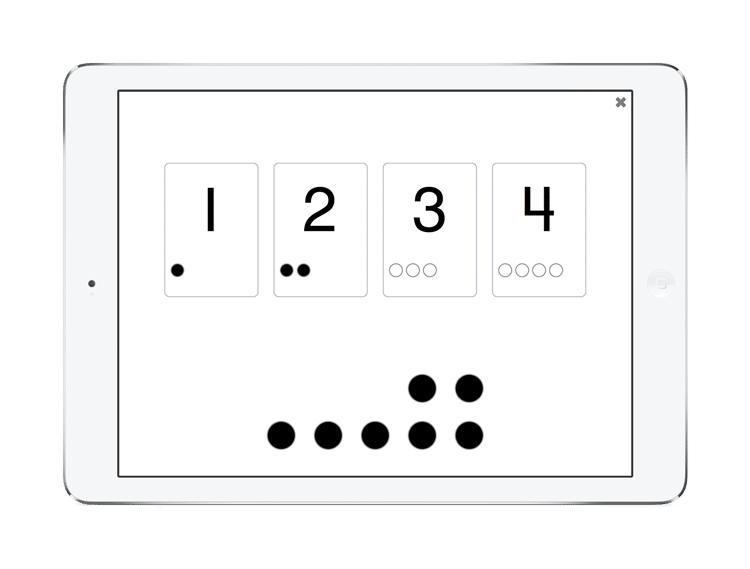
This online event discusses the development of number skills for children with Down syndrome and introduces DSE’s new See and Learn Numbers apps and resources. See and Learn Numbers is the latest addition to DSE’s teaching resources for children with Down syndrome.

Most children with Down syndrome find learning about numbers a particular challenge. Basic number skills are important in everyday life, yet surveys suggest that many teenagers and adults with Down syndrome are unable to work out the correct change when using money or calculate using numbers up to 100.

http://www.dseinternational.org/en-us/events/see-and-learn-numbers/?tz=america-new-york


July 2, 2015/0 Comments/by Other
https://stagecpanel.321foundation.org/wp-content/uploads/2015/07/first-counting-linking-quantity-1-4-3-ipad-air-s-ios8-l-750w.png 569 750 Other https://stagecpanel.321foundation.org/wp-content/uploads/2020/05/3-21_Foundation_Logo.png Other2015-07-02 23:14:342015-07-02 23:17:18Introducing See and Learn Numbers

Help Your Children Avoid Regression Over the Summer

Education, In the Media

From Susan M. Brefach, Ed. D. | Making School Work For Your Child

I can hear the sighs of relief everywhere as the school year winds to a close. Parents are exhausted from a year of vigilance and practice, driving and waiting. Teachers have given everything they have to their classes, and hope they are ready to move on. Advocates and psychologists like myself are looking forward to a break from leaving the house at 5:30 AM to be at a 7 AM school observation, or from multiple school meetings in a single day, plus a stack of IEPs to analyze at night.

And the kids…your kids are counting the hours to what they see as “freedom”—time off, fewer tasks to complete, no spelling lists or math tests, no book reports and sitting still for hours. You can’t really blame them. They’ve been putting out energy since September.

http://www.susanbrefach.com/blog/help-children-avoid-regression-over-summer/

June 17, 2015/0 Comments/by Other
https://stagecpanel.321foundation.org/wp-content/uploads/2015/06/Flip_Flops_Web.png 266 720 Other https://stagecpanel.321foundation.org/wp-content/uploads/2020/05/3-21_Foundation_Logo.png Other2015-06-17 22:18:082015-06-20 22:34:33Help Your Children Avoid Regression Over the Summer

Using the Wondertime Clock to Teach the Sense of Time

Education, Our Blog

Cognitive Connections LLP – Here is a short video by Sarah Ward, Executive Function expert, showing you how to make a WonderTime Clock to teach young children the passage of time and to increase their awareness of time.


June 8, 2015/0 Comments/by Other
https://stagecpanel.321foundation.org/wp-content/uploads/2015/06/Clock.png 483 1024 Other https://stagecpanel.321foundation.org/wp-content/uploads/2020/05/3-21_Foundation_Logo.png Other2015-06-08 22:35:592015-06-17 18:58:57Using the Wondertime Clock to Teach the Sense of Time

An Uncomplicated Life: A Book Review

Education, In the Media

From Huffington Post | The Blog

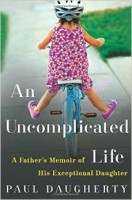
Still looking for the perfect gift for Father’s Day on June 21? Do you have a book lover to shop for? Maybe you know a father to a new baby with an intellectual or developmental disability? Allow me to recommend Paul Daugherty’s new memoir, An Uncomplicated Life.

Read more at: http://www.huffingtonpost.com/international-down-syndrome-coalition/an-uncomplicated-life-a-book-review-_b_7498710.html


June 3, 2015/0 Comments/by Other
https://stagecpanel.321foundation.org/wp-content/uploads/2015/06/An-Uncomplicated-Life_A-Book-Review_a-e1433802083702.jpg 200 132 Other https://stagecpanel.321foundation.org/wp-content/uploads/2020/05/3-21_Foundation_Logo.png Other2015-06-03 21:57:032015-06-10 02:25:13An Uncomplicated Life: A Book Review

Play provides important foundations for social competence

Education, In the Media

From Down Syndrome Education International

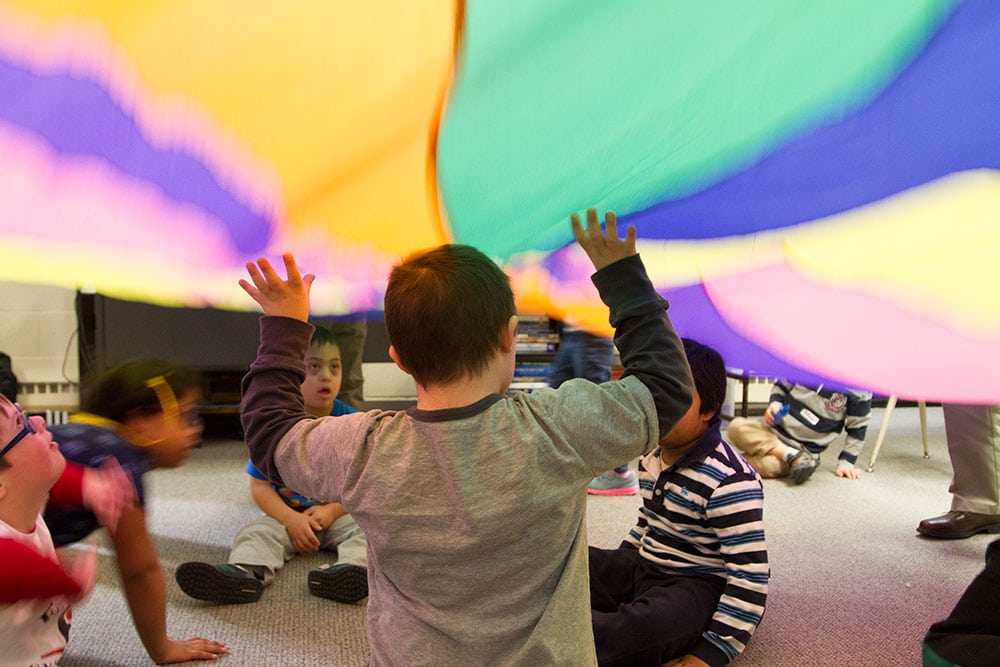
The ability to get on with and learn from other children is hugely important for all children. Studies suggest that children with Down syndrome play with a playmate in ways expected for their cognitive level even though they have more delayed language. Further research is needed to explore how to compensate for language delays and promote age appropriate play.

Read more at: www.dseinternational.org/en-us/education21/21/

View all examples: www.dseinternational.org/en-us/education21/

May 1, 2015/0 Comments/by Other
https://stagecpanel.321foundation.org/wp-content/uploads/2015/03/News_21_Play_Provides.jpg 667 1000 Other https://stagecpanel.321foundation.org/wp-content/uploads/2020/05/3-21_Foundation_Logo.png Other2015-05-01 22:07:412015-05-16 06:39:04Play provides important foundations for social competence

OT Fun at Home: Bath Time Activities

Education, Our Blog

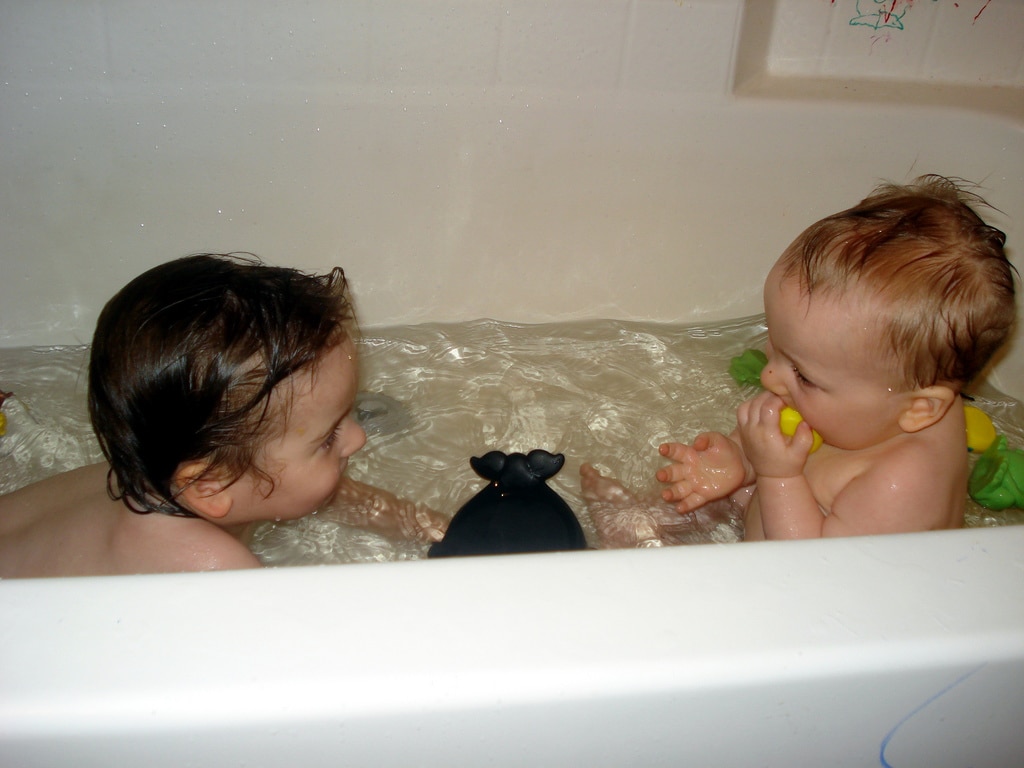
Bath time and water play provide lots of great opportunities for building a variety of skills for your child, including bilateral hand use and strengthening, coordination and manipulation of small objects, and learning to adjust to and respond to different types of sensory input. Here are some activities that can help with this!

• Squeezing sponges: Either loofah-type sponges for washing themselves, or cleaning sponges to wash the walls of the shower.

• Spray bottles: Twisting off the top to fill the bottle with water, then placing the top back on, and then squeezing the handle of the spray bottle to get things wet.

• Washcloths: Wring them out over a bucket, then put them back in the water–have a race to fill the bucket by squeezing out the washcloth!

• Squeeze toys: Rubber ducks, rubber frogs, small balls–any small manipulatives that can be squeezed and used during bath time!

• Scoop toys: Use a sandbox shovel, or a recycled plastic milk container cut in half, as a scoop to scoop up floating toys in the water and put them into a bucket.

• Pouring toys: Pouring from one container into another, back and forth.

• Folding towels and washcloths: This is a pre or post-bath time activity, but can also help work on bilateral hand use and coordination!

What are some other activities you’ve found are helpful during this regular routine to support your child’s overall skill development?

April 23, 2015/0 Comments/by Leslie Bodkin
https://stagecpanel.321foundation.org/wp-content/uploads/2015/02/bathtime.jpg 768 1024 Leslie Bodkin https://stagecpanel.321foundation.org/wp-content/uploads/2020/05/3-21_Foundation_Logo.png Leslie Bodkin2015-04-23 16:05:242015-05-14 17:31:29OT Fun at Home: Bath Time Activities
Page 7 of 10«‹56789›»
3-21 Foundation

Categories

  • Advocacy
  • Cognition
  • Education
  • Featured
  • Health
  • In the Media
  • Our Blog

Archives

  • October 2023
  • February 2022
  • September 2020
  • August 2020
  • October 2019
  • September 2019
  • August 2019
  • July 2019
  • May 2019
  • March 2017
  • May 2016
  • April 2016
  • March 2016
  • February 2016
  • January 2016
  • December 2015
  • November 2015
  • October 2015
  • September 2015
  • August 2015
  • July 2015
  • June 2015
  • May 2015
  • April 2015
  • March 2015
  • February 2015
  • January 2015
  • December 2014
  • November 2014
  • October 2014

Copyright 2026 © 3-21 Foundation, Inc. All rights reserved.

  • Facebook

Site designed and managed by Body1

Scroll to top