
321Foundation
  • About
    • A Letter from Our President
    • What We Believe
    • History
    • Board of Directors & Executive Team
    • Contact
  • Education
    • Overview
    • Learning Program Boston
    • Educational Consulting
    • Education Resources
  • Awareness
    • Overview
    • Awareness Resources
  • Advocacy
    • Overview
    • Advocacy Resources
  • News
  • Support Us
  • Donate
  • Search
  • Menu Menu

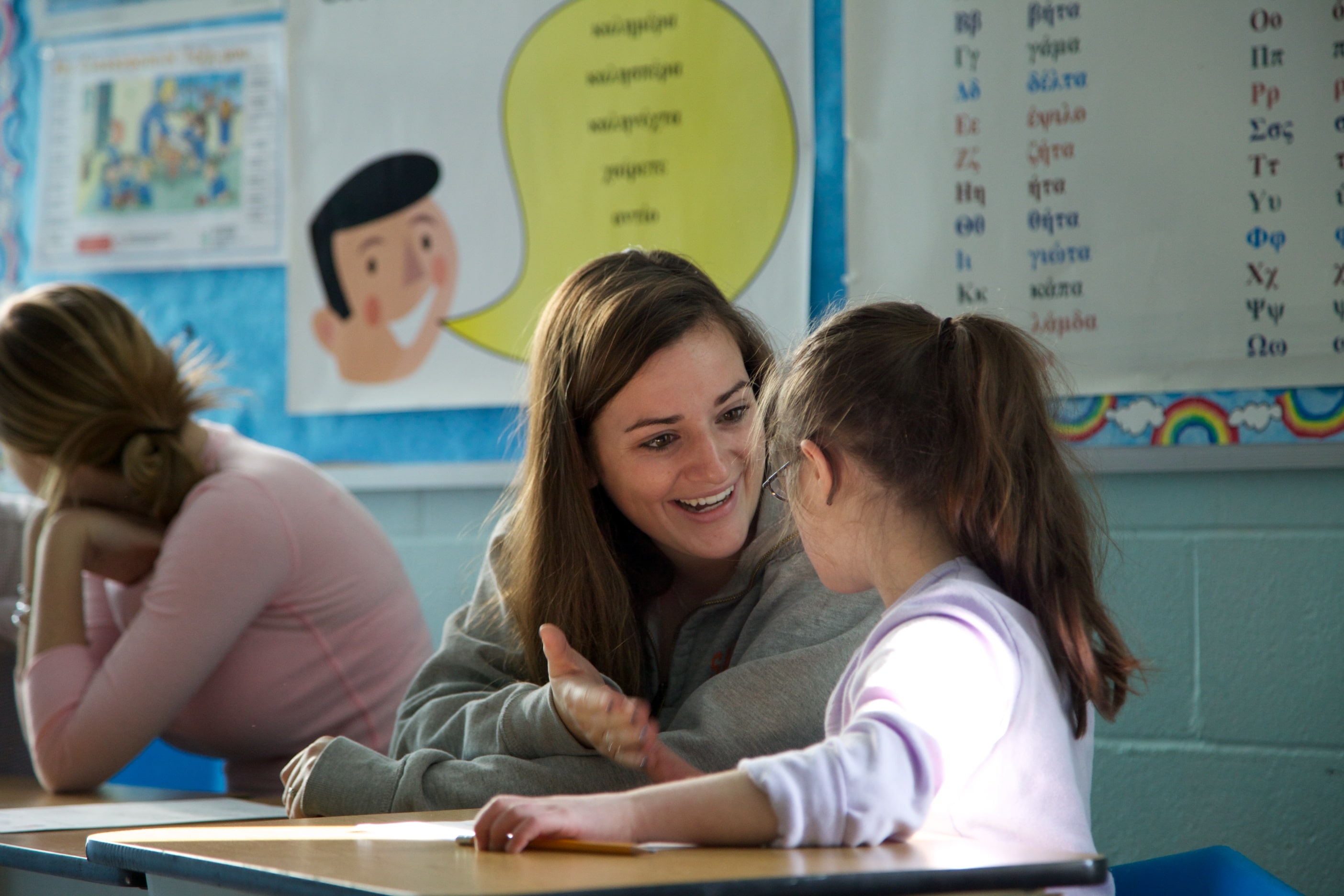
6 Quick Speech & Language Car Games

Education, Health, Our Blog

We ALL spend a lot of time in the car with our kiddos! Whether it’s trekking to sports, school or weekly errands, here are a few fun speech and language games to make the minutes fly by and build those communication skills!

  1. I Spy Speech Sounds – Is your child working on a speech sound? Practice using the sound by spying things that begin with that sound. For example, “b” sound (e.g., bus, beeping car, bump, bulldozer, bridge, building). Have your child help you spy and repeat the words you spy!
  1. Sing those Favorite Tunes – For our littlest language learners singing those familiar tunes build vocabulary, language and speech skills. Sing Old MacDonald-animal names, early sounds baa, moo, Wheel on the Bus, Itsy Bitsy Spider! Try pausing in the song to let them practice using words (e.g., Old MacDonald had a (pause). With a (pause)).
  1. Word Games – For older children, play word games with Categories, Antonyms, Synonyms.

• Think of 3 Fruits … 1) banana, 2) [fruit 2], 3) [fruit 3]
• What’s the opposite of hot?
• Can you think of another word for cold-freezing, chilly, frigid?

  1. Picture Books – I keep a soft basket filled with a few picture books for my girls in our back seat. Even if your child is not yet reading they can “read” by telling you a story from the pictures. I often tell parts, once upon a time there were three bears…and allow my child to fill in “a mama bear, a papa bear” I prompt with simple questions-what happened next? How did the porridge taste? Your child can build vocabulary, describing, and work on producing sentence structure.
  1. Talk About The W’s (who, what, where) – Talk to your child about and wonder together about where you are going, who you’ll see, what you might say in conversation. Previewing and priming this language gives children an opportunity to practice before the actual event. For example, We’re going to Sam’s birthday party. I wonder who we might see? We can say “hi” and “happy birthday” to Sam. I know Sam likes Ninja Turtles, kids might be playing Turtles. What turtle would you be? You could say, “Let’s play ninja turtles?”
  1. I say, You say – Little ones love imitation games! Play sound games with your little talkers by imitating their sounds, and having them imitate yours. For example, I say ma, ma, ma, ma. (Child’s name) says, ma, ma, (pause). If your child makes a sound, imitate her sound back! You are working on beginning language and early conversation skills such as imitating, turn taking, and making early sounds.

Happy Driving and of course safe driving always comes first!

Photo: Larchleaf
February 16, 2015/0 Comments/by Jodi Small
https://stagecpanel.321foundation.org/wp-content/uploads/2015/02/quick-speech.jpg 683 1024 Jodi Small https://stagecpanel.321foundation.org/wp-content/uploads/2020/05/3-21_Foundation_Logo.png Jodi Small2015-02-16 14:57:432015-05-16 06:44:566 Quick Speech & Language Car Games

The intensity of interventions matters – but how much?

Cognition, Education, In the Media

From Down Syndrome Education International

Understanding how best to help development not only involves discovering what approaches work, but also how much, and how frequently, intervention is necessary. Studies with children with Down syndrome are starting to offer some indications, but more research is needed.

Read more at: www.dseinternational.org/en-us/education21/15/

View all examples: www.dseinternational.org/en-us/education21/

February 8, 2015/0 Comments/by Other
https://stagecpanel.321foundation.org/wp-content/uploads/2015/02/IMG_1103.jpg 1872 2808 Other https://stagecpanel.321foundation.org/wp-content/uploads/2020/05/3-21_Foundation_Logo.png Other2015-02-08 16:46:002015-05-16 06:45:05The intensity of interventions matters – but how much?

Training attention skills may improve later learning outcomes

Cognition, Education, In the Media

From Down Syndrome Education International

Research is beginning to explore the development of attention skills in children with Down syndrome and how these relate to later learning outcomes. Initial findings suggest that supporting the development of attention skills in the early years could help to improve later language, literacy and number outcomes.

Read more at: www.dseinternational.org/en-us/education21/14/

View all examples: www.dseinternational.org/en-us/education21/

February 1, 2015/0 Comments/by Other
https://stagecpanel.321foundation.org/wp-content/uploads/2015/02/IMG_1130.jpg 1872 2808 Other https://stagecpanel.321foundation.org/wp-content/uploads/2020/05/3-21_Foundation_Logo.png Other2015-02-01 16:07:502015-05-16 06:44:46Training attention skills may improve later learning outcomes

Reader’s View: Building Acceptances

Advocacy, Education, Our Blog

A Letter to the Editor of the Duxbury Clipper

We have recently learned that you have several students with Down syndrome in the Duxbury school district.

Although significant strides have been made in the past few decades in areas of health, education, and public perception of people with Down syndrome, many misperceptions still exist. Stereotypes and pre-conceived notions can limit opportunities for people with Down syndrome to live up to their full potential.

In the 1940’s, Dr. Spock recommended institutionalization for babies born with Down syndrome. Many individuals spent their lives without access to education or the outside world. That fact, coupled with the fact that Down syndrome is a low-incidence disability, and the life expectancy as recently as the 1980s was only 25 years of age, has shaped some of society’s outdated generalizations and expectations. Thanks to remarkable advances in medicine, the new life expectancy is 60 years of age. This has allowed for researchers to delve deeper into the role that the extra 21st chromosome has on lifelong development.

New advances in Down syndrome research have uncovered a great deal about how individuals with Down syndrome process information and learn. Students with Down syndrome have cognitive strengths that can support them in a general education classroom setting. Most children with Down syndrome are strong visual learners, and, with targeted instruction, some children have the capacity to learn to read whole words as young as 3 years old.

Read more at http://duxburyclipper.ma.newsmemory.com

January 21, 2015/0 Comments/by Maureen Blazejewski
https://stagecpanel.321foundation.org/wp-content/uploads/2014/12/banner5.jpg 1872 2808 Maureen Blazejewski https://stagecpanel.321foundation.org/wp-content/uploads/2020/05/3-21_Foundation_Logo.png Maureen Blazejewski2015-01-21 16:23:352015-05-16 06:46:09Reader’s View: Building Acceptances

Different early interventions have different outcomes: Responsive Teaching

Education, Health, In the Media

From Down Syndrome Education International

Early intervention has been advocated for children with Down syndrome since the 1970s as a means to improving development during the critical early years. Yet, there is a disturbing lack of research assessing the benefits of specific interventions. Some available studies suggest that different interventions can result in substantially different outcomes, indicating that further research is urgently needed.

Read more at: www.dseinternational.org/en-us/education21/12/

View all examples: www.dseinternational.org/en-us/education21/

January 18, 2015/0 Comments/by Other
https://stagecpanel.321foundation.org/wp-content/uploads/2020/05/3-21_Foundation_Logo.png 0 0 Other https://stagecpanel.321foundation.org/wp-content/uploads/2020/05/3-21_Foundation_Logo.png Other2015-01-18 16:31:272015-05-16 06:46:36Different early interventions have different outcomes: Responsive Teaching

Boston School Committee’s Newest Member Is An Advocate For Children With Disabilities

Education, In the Media

From wbur.org

Regina Robinson, dean of students at Cambridge College, is the newest member of the Boston School Committee. She explains how her life has changed after…

Read more at: http://www.wbur.org/2015/01/14/regina-robinson-boston-school-committee

January 14, 2015/0 Comments/by Other
https://stagecpanel.321foundation.org/wp-content/uploads/2020/05/3-21_Foundation_Logo.png 0 0 Other https://stagecpanel.321foundation.org/wp-content/uploads/2020/05/3-21_Foundation_Logo.png Other2015-01-14 16:34:122015-05-16 06:46:55Boston School Committee’s Newest Member Is An Advocate For Children With Disabilities

Children with Down syndrome can be as motivated as other children

Cognition, Education, In the Media

From Down Syndrome Education International

Motivation is important for learning. It is often assumed that children with learning disabilities are less motivated than other children. Recent research suggests this might not be the case: children with Down syndrome can be as motivated as other children at the same stage of mental development.

Read more at: www.dseinternational.org/en-us/education21/11/

View all examples at: www.dseinternational.org/en-us/education21/

January 13, 2015/0 Comments/by Other
https://stagecpanel.321foundation.org/wp-content/uploads/2020/05/3-21_Foundation_Logo.png 0 0 Other https://stagecpanel.321foundation.org/wp-content/uploads/2020/05/3-21_Foundation_Logo.png Other2015-01-13 16:35:592015-05-16 06:47:08Children with Down syndrome can be as motivated as other children

Autism in Down syndrome is not typical autism

Education, Health, In the Media

From Down Syndrome Education International

An increasing number of children with Down syndrome are being diagnosed as also having autism or autistic spectrum disorder (ASD). Research is exploring the prevalence and the characteristics of autism and autistic spectrum disorders in people with Down syndrome, and informing more reliable diagnosis. More research is needed to better understand these dual diagnoses and to identify effective ways to support development and learning for these children.

Read more at: www.dseinternational.org/en-us/education21/10/

View all examples: www.dseinternational.org/en-us/education21/

January 6, 2015/0 Comments/by Other
https://stagecpanel.321foundation.org/wp-content/uploads/2020/05/3-21_Foundation_Logo.png 0 0 Other https://stagecpanel.321foundation.org/wp-content/uploads/2020/05/3-21_Foundation_Logo.png Other2015-01-06 16:41:472015-05-16 06:47:21Autism in Down syndrome is not typical autism

3 Big Wins for Special Education in 2014

Education, In the Media

From Huffington Post

The way that K-12 learners are taught is in rapid flux, particularly when it comes to students in special education programs. These are the students that need the most help and support and the ones where a push for higher parental involvement does not always bridge the academic gap. These students need highly-trained teachers and program resources designed with them in mind to succeed. Because of this, special education researchers, practitioners, and activists are always looking for innovative ways to serve those students that need the help the most. This year was one of many wins for special education students and the start to many great initiatives in the future.

U.S. Education Department raises special education benchmarks. Earlier last year, the U.S. Department of Education announced that the way it determines if states are meeting the needs of their students with disabilities is going to change. Factors like state graduation rates and test scores will now be considered more heavily when determining what states are helping, and what states are failing, their special education students. States that are unable to meet the new benchmarks set forth for three years or more could face losing some of their special education funding.

So just how different are the new requirements, and how difficult will it be for states to achieve the benchmarks when it comes to special education students? To put it in perspective, 41 states met the requirements of the old system. Under the new requirements, only 18 states meet the standards. It is estimated that 6.5 million children in the U.S. have disabilities.

Read more at: http://www.huffingtonpost.com/matthew-lynch-edd/3-big-wins-for-special-ed_b_6416902.html

January 5, 2015/0 Comments/by Other
https://stagecpanel.321foundation.org/wp-content/uploads/2020/05/3-21_Foundation_Logo.png 0 0 Other https://stagecpanel.321foundation.org/wp-content/uploads/2020/05/3-21_Foundation_Logo.png Other2015-01-05 21:45:202015-05-16 06:47:343 Big Wins for Special Education in 2014

Student Services: Special education focus is on inclusion in Cambridge

Education, In the Media

From Wicked Local Cambridge:

Perhaps the biggest change for parents is the level of communication they now experience, they said. Cambridge Public Schools parent Julie Messina has a son with Down’s syndrome.

Although she said she hasn’t seen much change at the school level, she’s noticed a big change in the district-wide approach to special education.

“There definitely seems to be a desire to be more responsive,” Messina said. “I understand (Dr. Greer) has taken a lot of this year to do internal housekeeping, but already we’re seeing the fruits of that labor, at least in terms of better communication to parents.”

Read more at: http://cambridge.wickedlocal.com/article/20140418/News/140416439

Photo: Scokzek

December 30, 2014/0 Comments/by Other
https://stagecpanel.321foundation.org/wp-content/uploads/2014/12/student-services.jpg 701 1024 Other https://stagecpanel.321foundation.org/wp-content/uploads/2020/05/3-21_Foundation_Logo.png Other2014-12-30 20:55:492015-05-16 06:47:52Student Services: Special education focus is on inclusion in Cambridge
Page 8 of 10«‹678910›»
3-21 Foundation

Categories

  • Advocacy
  • Cognition
  • Education
  • Featured
  • Health
  • In the Media
  • Our Blog

Archives

  • October 2023
  • February 2022
  • September 2020
  • August 2020
  • October 2019
  • September 2019
  • August 2019
  • July 2019
  • May 2019
  • March 2017
  • May 2016
  • April 2016
  • March 2016
  • February 2016
  • January 2016
  • December 2015
  • November 2015
  • October 2015
  • September 2015
  • August 2015
  • July 2015
  • June 2015
  • May 2015
  • April 2015
  • March 2015
  • February 2015
  • January 2015
  • December 2014
  • November 2014
  • October 2014

Copyright 2026 © 3-21 Foundation, Inc. All rights reserved.

  • Facebook

Site designed and managed by Body1

Scroll to top